
In modern industrial, commercial, and agricultural operations, energy efficiency and precise control over machinery have become critical for long-term success. One technology that has transformed equipment performance in these sectors is the variable frequency drive (VFD). By allowing motors to operate only at the required speed and torque, a VFD eliminates unnecessary energy waste, reduces mechanical stress, and extends equipment lifespan.
When integrated into pumping systems, a variable frequency drive pump delivers even greater advantages. It ensures stable water pressure, smooth start-up and shut-down, and optimal flow control according to demand. These capabilities are essential in applications ranging from municipal water supply and HVAC systems to irrigation and industrial process control. With modern advancements in electronics, VFDs now offer improved reliability, compact designs, and intelligent monitoring features that make them a top choice for forward-thinking businesses.
This article will explore what a variable frequency drive is, why it’s particularly effective when paired with pumps, how it contributes to energy savings, and what factors to consider when selecting the right model for your needs.
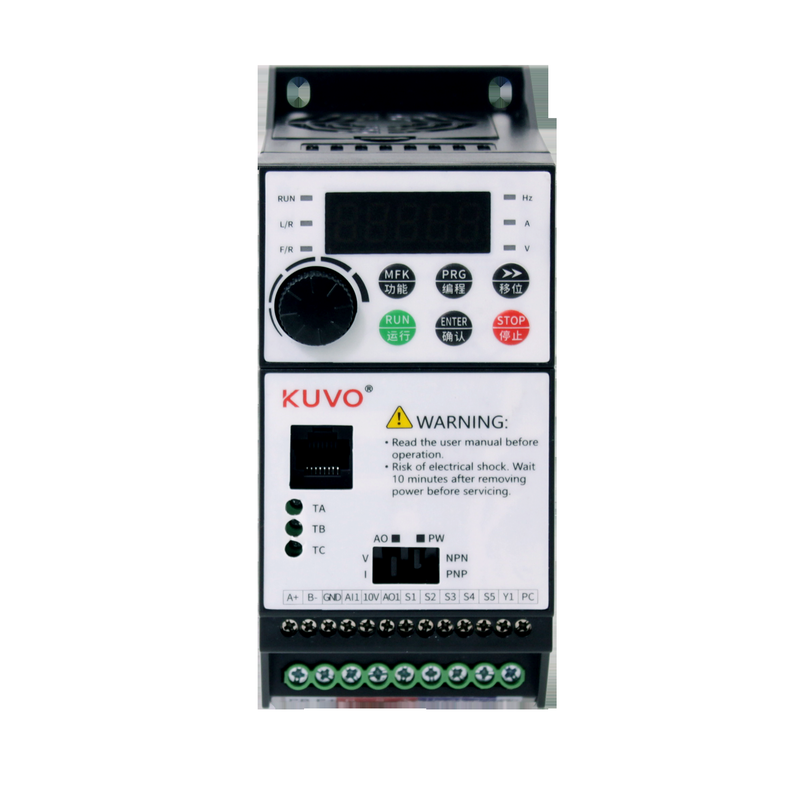
What Is a Variable Frequency Drive and How Does It Work?
A variable frequency drive (VFD) is an advanced electronic device designed to control the speed and torque of electric motors by adjusting the frequency and voltage of the power supply. Unlike fixed-speed systems that operate at a constant rate regardless of demand, a VFD dynamically adapts motor performance to match real-time requirements. This flexibility not only improves efficiency but also significantly reduces wear and tear on equipment.
Core Operating Principle
At its core, a VFD converts the incoming AC power into DC through a rectifier, then uses insulated-gate bipolar transistors (IGBTs) to generate a variable-frequency AC output. This process allows precise control over motor rotation speed, enabling equipment to operate at the optimal point for each task. For example, in a variable frequency drive pump, this means adjusting pump speed to deliver exactly the right water flow without overworking the system.
Key Components of a VFD
Rectifier Unit – Converts AC input to DC power.
DC Bus – Smooths and stores DC energy for stable output.
Inverter Module – Uses IGBTs to convert DC back into AC at the desired frequency.
Control Interface – Allows programming and monitoring of motor operation parameters.
Applications in Different Industries
From manufacturing lines and conveyor systems to HVAC units and water treatment plants, VFDs have a wide range of applications. When paired with pumps, they excel in applications where demand fluctuates—such as irrigation systems during seasonal changes or industrial cooling systems that adjust based on operational load.
Why Choose a Variable Frequency Drive Pump Over Traditional Pump Systems?
Traditional pumping systems often operate at a constant speed, regardless of how much flow or pressure is actually needed. This approach leads to wasted energy, increased mechanical stress, and higher maintenance costs over time. In contrast, a variable frequency drive pump intelligently adjusts motor speed to match real-time system demand, delivering water or fluid at the precise rate required.
Optimized Energy Use
By controlling motor speed, a VFD pump can drastically reduce electricity consumption—especially in applications where demand fluctuates throughout the day. For example, in municipal water supply networks, peak demand may occur in the morning and evening, while midday usage drops significantly. A traditional pump would continue running at full speed, wasting energy, while a VFD pump automatically slows down to match the lower requirement.
Reduced Mechanical Stress
A major advantage of VFD-driven pumps is the soft start and stop capability. Instead of the sudden jolt from a direct-on-line start, the pump accelerates gradually, reducing strain on bearings, seals, and impellers. Over time, this results in fewer breakdowns and longer service life for the equipment.
Enhanced Pressure Stability
Fluctuating water pressure can cause operational issues in many systems, from irrigation lines to HVAC cooling loops. A variable frequency drive pump maintains consistent pressure even when demand changes rapidly, improving performance and protecting downstream equipment.
Lower Maintenance and Downtime
Because the pump operates only at the necessary speed, wear-and-tear on mechanical parts is reduced. This means fewer unplanned shutdowns, lower spare parts consumption, and less labor required for maintenance tasks.
How Can a Variable Frequency Drive Improve Energy Efficiency and Reduce Costs?
The primary reason many industries adopt a variable frequency drive (VFD) is its ability to significantly reduce electricity consumption while maintaining optimal system performance. This is especially true for pump applications, where energy usage can account for a large percentage of total operating costs.
Energy Savings Through Speed Control
Motor power consumption is proportional to the cube of its operating speed. This means even a small reduction in pump speed can lead to substantial energy savings. For example, reducing pump speed by just 20% can result in nearly 50% less energy use. A variable frequency drive pump continuously adjusts motor speed to match actual demand, avoiding the waste common in fixed-speed systems.
Elimination of Throttling Losses
In traditional systems, excess flow is often controlled using valves or mechanical throttling. This wastes energy by forcing the pump to work harder than necessary. With a VFD, the pump delivers exactly the required flow rate without relying on energy-draining mechanical restrictions.
Peak Demand Cost Reduction
In many regions, electricity bills are influenced not only by total consumption but also by peak demand charges. By gradually ramping up motor speed during start-up and avoiding unnecessary full-speed operation, a VFD reduces peak electrical loads, leading to lower utility bills.
Lower Maintenance and Replacement Costs
Operating at optimal speed reduces vibration, heat buildup, and component stress. This extends the service life of bearings, seals, and motors, cutting down the frequency and cost of replacements. In pumping systems—especially those with large horsepower motors—these savings can be significant over the lifespan of the equipment.

What Factors Should You Consider When Selecting a Variable Frequency Drive Pump?
Choosing the right variable frequency drive pump involves more than just matching motor power—it requires understanding your application’s operating conditions, control requirements, and efficiency goals. The following factors can guide you toward the most suitable solution.
1. Input Voltage and Phase Compatibility
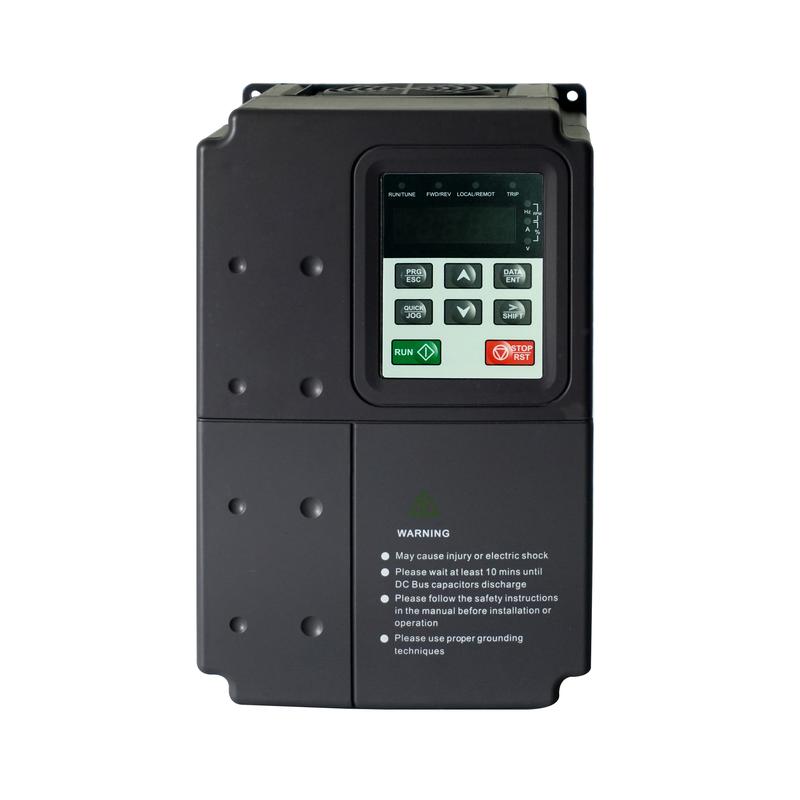
One of the first considerations is matching the VFD’s input specifications to your power supply. For example, the KV10 Variable Frequency Drive supports
200V (-10%) ~ 240V (+10%) Single-phase
380V (-10%) ~ 480V (+10%) Three-phase
This flexibility makes it suitable for both small commercial systems and large industrial operations.
2. Output Control Method
The KV10 model features VF control, ensuring stable and precise motor operation. For pumping applications, this translates into consistent flow rates and pressure stability, even when demand fluctuates significantly.
3. Power Range and Application Size
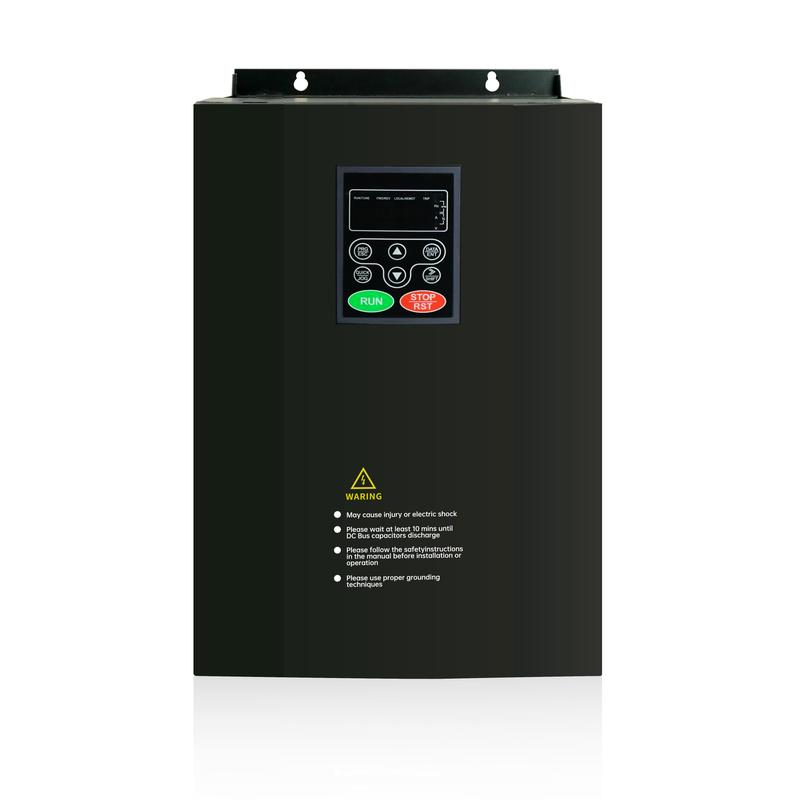
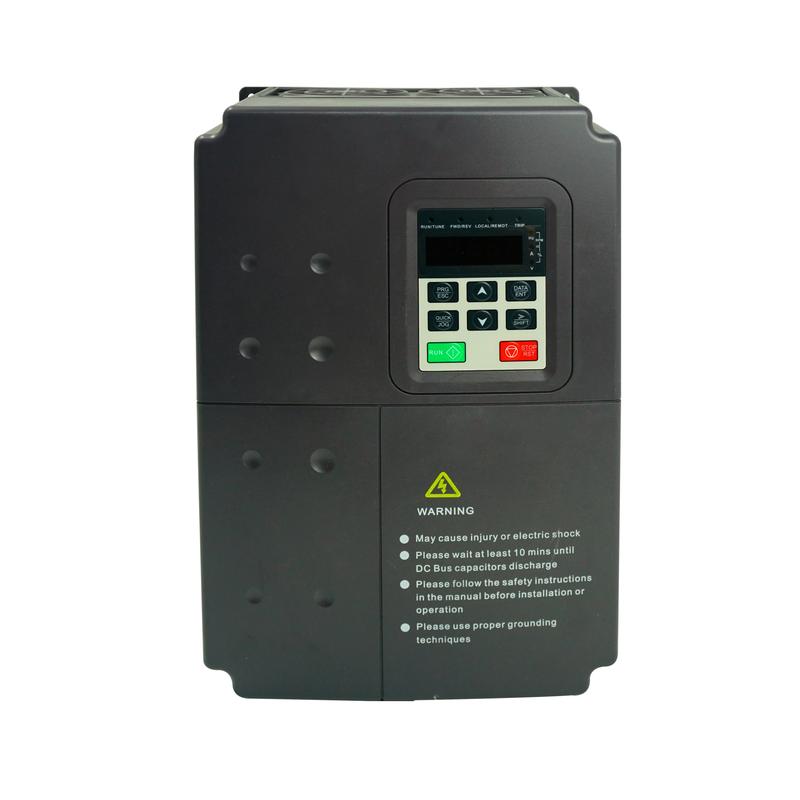
For larger-scale operations, the KV90M Series offers multiple power levels:
LCGK-22-30KW – Ideal for municipal water supply or large-scale irrigation systems.
LCGK-15-18.5KW – Suitable for medium-sized industrial process control or HVAC water circulation.
LCGK-7.5-11KW – Fits smaller manufacturing facilities or commercial building water systems.
LCGK-4-5.5KW – Perfect for small-scale applications or auxiliary pump systems.
LCGK-0.75-2.2KW – Designed for compact installations with limited flow requirements.
4. Environmental and Installation Conditions
Ensure the VFD is rated for the environmental conditions of your site, including temperature, humidity, and potential dust or moisture exposure. The KV90M series is designed for industrial durability, making it suitable for challenging operating environments.
5. Monitoring and Protection Features
Look for built-in protections such as overvoltage, undervoltage, overload, and short-circuit safeguards. Intelligent diagnostics and fault reporting can further reduce downtime by helping maintenance teams respond quickly to issues.
How Do LCGK‘s KV10 and KV90M Series Meet Diverse Industrial Pumping Needs?
LCGK’s product lineup offers a complete solution for businesses seeking performance, efficiency, and reliability in their pumping systems. Whether your operation involves large-scale municipal water distribution or precision control in smaller commercial applications, there is a LCGK variable frequency drive that fits your requirements.
KV10 Variable Frequency Drive – Compact and Versatile
The KV10 is an excellent choice for operations requiring flexibility in power supply. Supporting both single-phase (200V–240V) and three-phase (380V–480V) inputs, it can be deployed in a wide variety of installations. Its VF control technology ensures precise motor operation, stable water pressure, and reduced mechanical stress—making it a reliable solution for variable frequency drive pump applications where space and adaptability are key considerations.
KV90M Series – High Power for Demanding Applications
For operations requiring more robust performance, the KV90M Series delivers high-capacity power options from 0.75KW to 30KW.
Heavy-Duty Performance – Models like LCGK-22-30KW are designed for intensive use in municipal water plants and large irrigation networks.
Medium to Light Duty Options – Variants from LCGK-15-18.5KW down to LCGK-0.75-2.2KW give facility managers the flexibility to match drive capacity to system size without overspending on unused power.
Industrial Durability – Built with high-quality IGBT components and protective features, the KV90M series withstands challenging environments while minimizing downtime.
Unified Benefits Across the Range
Both the KV10 and KV90M series share key advantages:
Energy Efficiency – Optimized motor control reduces operating costs.
System Protection – Built-in safeguards extend equipment lifespan.
Customizable Operation – Adjustable parameters suit a variety of pumping scenarios, from steady 24/7 operation to variable seasonal demand.

Conclusion
The adoption of a variable frequency drive—especially in pump applications—has proven to be one of the most effective strategies for achieving operational efficiency, lowering energy costs, and extending equipment life. By matching motor performance precisely to system demand, a variable frequency drive pump not only reduces electricity consumption but also minimizes mechanical stress, ensures stable pressure, and cuts down on maintenance expenses.
When selecting the right solution, factors such as input voltage, control method, power capacity, and environmental durability must be considered carefully. LCGK’s KV10 Variable Frequency Drive and KV90M Series cover a wide range of power requirements and operating conditions, giving businesses the flexibility to choose the ideal model for their specific needs.
Whether you manage a large municipal water facility, an industrial process plant, or a smaller commercial system, investing in LCGK’s advanced VFD technology can deliver substantial long-term returns. With energy savings, reliable performance, and robust protection features, LCGK VFD ensures your pumping systems operate at peak efficiency—day after day, year after year.
 English
  French
  Arabic
  German
  Portuguese
  Spanish
  Italian
  Polish
  Russian
  Indonesian
  Turkish
  Bulgarian
  Dutch
Dutch  Japanese
  Korean
  Czech
Czech  Danish
  Greek
Greek  Estonian
  Finnish
  Hungarian
  Lithuanian
  Latvian
  Romanian
  Slovak
  Slovenian
  Swedish
  Ukrainian
  Chinese